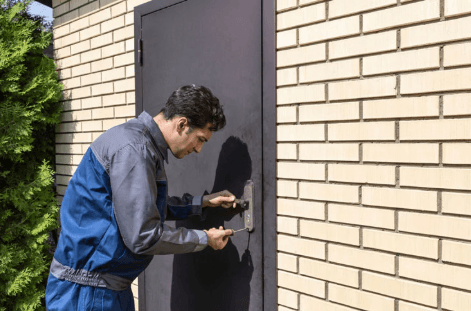
The front door is the main point of defence of a home, and yet, the older it is, the higher the risk. This is further exacerbated by the fact that the UK still has a significant portion of older, period, or mid-century buildings.
While an old lock might still work smoothly, its ability to withstand modern forced-entry techniques is often severely compromised. Let’s explore why these components represent a silent security risk for your abode and what the first step is in protecting your property.
The Illusion Of Security In Older Homes
Most people still assume that because a door is heavy, made of solid timber, or looks robust, their security is adequate. However, a door is only as strong as its weakest point, and that is almost invariably the cylinder or the locking mechanism itself.
In many homes built or renovated during the late 20th century, the installed locks were considered “high security” at the time. Yet, the landscape has evolved rapidly over the last two decades, and so have criminal methodologies.
Burglars nowadays are more sophisticated and have specialised in exploiting the specific mechanical weaknesses found in older, standard cylinder designs.
So, a lock that has functioned perfectly for twenty years still provides a false sense of security, which you have to get resolved to protect your abode.
How Wear And Tear Compromises Your Front Door
Mechanical locks consist of precision-engineered springs, pins, and tumblers. Over years of daily use, however, these internal components undergo significant stress and naturally deteriorate.
Furthermore, metal fatigue, the accumulation of internal debris, and the degradation of lubricating oils all contribute to the gradual failure of the locking mechanism.
When a key is inserted and turned, the internal pins must align perfectly within the cylinder to allow the plug to rotate. In an older lock, these pins can become rounded or worn, leading to “key play,” where the key feels loose or requires a specific “wiggle” to engage the bolt.
This not only makes the door difficult to lock or unlock but also creates structural vulnerabilities that are easily exploited by someone with the right tools.
Furthermore, the springs that hold the pins in place can weaken, making the lock significantly more susceptible to techniques such as “bumping,” in which a specially cut key is used to jar the internal pins into the open position.
What Are The Main Threats To Traditional Locks
The most significant threat to older Euro-cylinder locks, which are extremely common in British homes, is a technique known as “lock snapping.”
This method targets the weakest point of the cylinder: the centre, where the screw hole for the fixing bolt is located. Many older cylinders were designed without any sacrificial sections or anti-snap technology.
A burglar can apply force to the cylinder’s protruding end with simple tools, causing the lock to snap in half and effectively bypass all the internal pins and tumblers.
This is a quiet, rapid, and devastatingly effective method of entry that can cause a nasty surprise for homeowners, who are often unaware of their vulnerability.
Because this technique exploits a structural design flaw inherent in standard older cylinders, there is almost nothing an occupant can do to prevent it through maintenance alone. The lock must be physically replaced with a modern, anti-snap variant.
How Do You Know Your Locks Need An Upgrade
Recognising that your locks have reached the end of their viable lifespan is essential. There are several clear physical indicators that suggest an immediate upgrade is necessary.
If your key requires force to turn, or if you consistently have to pull or push the door to get the lock to engage, the internal mechanism is likely misaligned or damaged.
Additionally, if you can see that the cylinder is sitting flush or protruding from the outer door handle, it is an immediate red flag. A cylinder that sits proud of the handle cover is exposed and much easier to grip for snapping.
Another sign is the lock’s age. If your home has not had its locks replaced in the last ten years, it is highly likely that the hardware no longer meets current residential security standards.
The Importance Of British Standard Compliance
The benchmark for security in the UK is the British Standard.
So, when replacing an old lock, it is best to look for hardware that carries the British Standard Kitemark, typically associated with the BS3621 designation for mortice locks or TS007 for Euro-cylinders.
These standards are not just mere recommendations, though. They are the result of rigorous testing protocols that simulate various attack methods, including drilling, picking, and snapping.
Insurance providers in the UK often require that locks conform to BS3621 or TS007 to validate a home insurance policy.
If a burglary occurs and it is found that the locks were non-compliant or outdated, it can result in a claim being rejected, costing you money in the process.
Therefore, upgrading to British Standard hardware is as much about financial protection and regulatory compliance as it is about physical security.
See also: Building a Future Ready Home Starts Behind the Walls
The Benefits Of Modern Security Hardware
Modern high-security cylinders, such as those rated to a 3-star standard under TS007, offer significant advantages over their predecessors. These cylinders feature a sacrificial front section that breaks away under attack, leaving the lock’s core intact and inaccessible.
They also incorporate hardened steel pins and anti-drill plates that prevent the most common physical attacks. Beyond the mechanical improvements, modern locks often come with controlled key systems that prevent unauthorised key duplication.
This means that if you give a key to a tradesperson or a neighbour, you can have greater confidence that no illicit copies have been made. Investing in these technologies effectively neutralises the common threats that render older locks obsolete.
Professional vs DIY Installation
While the modern market offers an abundance of DIY locking solutions, installing high-security hardware requires professional precision.
A lock that is fitted poorly, even if it is a high-quality product, can be just as vulnerable as an old one. Professional locksmiths possess the tools to ensure that cylinders are measured accurately to prevent protrusion and that door alignment is perfect.
Incorrect installation can cause the locking mechanism to bind, which places undue stress on internal components and leads to premature failure.
Furthermore, a trusted Croydon security locksmith can offer bespoke advice on the specific type of lock required for your door—whether it is a composite, timber, or uPVC door—ensuring that the hardware is compatible and provides the intended level of security.
Conclusion
As you can see, it’s best not to leave security to chance. Even though older locks might be functional, they’re no match for the advanced techniques that burglars use nowadays.
The best step is thus to take proactive steps to upgrade them and ensure that your front door remains a true barrier rather than an invitation for opportunistic thieves. The peace of mind that comes with knowing your property is properly secured is totally worth it.
Good luck and stay safe!