Modern industry requires equipment that is reliable and can perform well in challenging circumstances. Unforeseen breakdowns tend to cause a chain reaction in production schedules, accident prevention, and maintenance expenditures. Infrared (IR) thermography has proven to be a worthwhile technique for detecting problems hidden from view before they cause further complications. IR thermography uses heat and temperature variations to provide maintenance technicians with information about equipment operation to avoid costly downtime. The following five techniques describe a procedure that sharpens equipment reliability and improves maintenance decisions.
Early Detection of Hidden Faults
Thermal imaging is very effective at identifying issues that are not detectable by the human eye when a site is surveyed. Electrical resistance, insulation deterioration, or friction in mechanical components will frequently produce excessive heat sooner rather than later when a problem arises. Infrared testing will immediately indicate thermal anomalies in these areas so that the location of a possible issue related to friction or wiring that is not fully engaged or components nearing the end of their lifespan can be quickly determined. Such early intervention will prevent repairs of a damaged part or preventative work just before it fails, and minimize secondary damage.
Preventing Downtime Through Predictive Maintenance
One of the most important uses of thermal imaging is in its ability to prevent downtime. Downtimes affect production flow, cause late shipments, and increase spending. Thermal analysis is useful in predictive maintenance tasks because, rather than pinpointing flaws, it points to trends. By observing temperature variation trends, it becomes possible to predict times when failures will occur. These failures can then be fixed during planned downtimes rather than having to close down in emergencies. Many organizations choose to invest in reliable infrared thermography services that integrate seamlessly with existing maintenance plans. This ensures critical assets remain available when production demand peaks.
Improving Electrical System Reliability
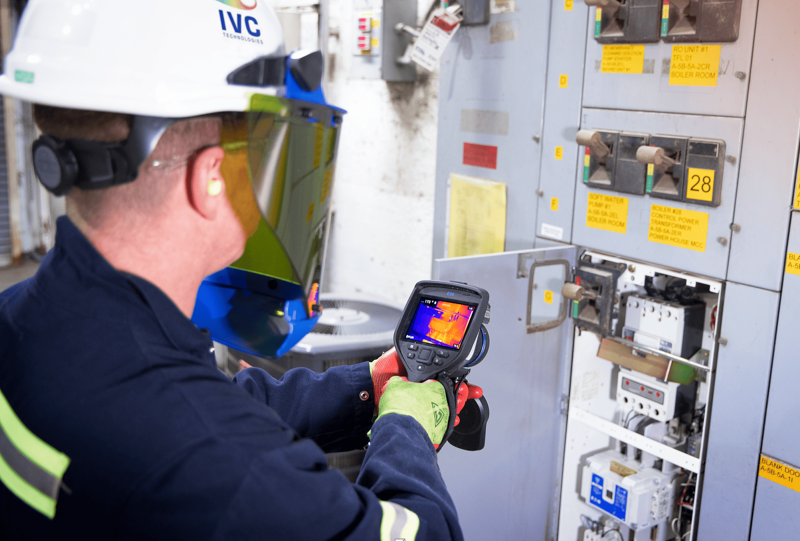
Electrical circuits are a typical example of a failure-prone system, more so in high-wattage circuits or in situations where aging has taken place. Thermal imaging is a noncontact, safe means of evaluating active electrical panels, switchgear, or transformers. There are irregularities in loading, a faulty circuit breaker, or a degenerating wire, as shown by a thermal map. Through the detection of these problems, facilities become less susceptible to arc, fire, or unexplained power outages. Regular thermal analysis is a means of validating repairs to ensure a return to a normal operating temperature.
Enhancing Mechanical Performance and Asset Lifespan
The mechanical parts, like bearings, couplings, and motors, produce specific thermal radiation patterns during the development of wear. The process of IR thermography highlights these fine details of thermal radiation. The mechanism of thermography provides vital information on how to prevent any possible development of intense vibration or seizing of mechanical parts. By this means, any adverse effect of inefficient mechanical performance will not occur. This process will result in a reduction in the replacement rate of equipment over a period of time. This added visibility helps standardize maintenance practices across similar assets, improving consistency in performance outcomes.
See also: Tech News Feedworldtech: Get the Latest Tech News and Innovations at Feedworldtech
Supporting Safer and More Efficient Inspections
Both safety and efficiency are important to equipment reliability programs. Thermal imaging allows inspections to be taken from a distance, reducing exposure to high temperatures, moving parts, or live electrical conductors. Inspections are also faster because large areas can be scanned in a very short time without dismantling. Greater efficiency promotes more frequent evaluations, leading to better data and trend analysis. Safer inspections diminish human error due to working under hazardous conditions. When technicians work confidently and consistently, the results of inspections become more reliable, adding power to the entire maintenance process. Reduced inspection time also allows maintenance teams to focus resources on corrective actions rather than prolonged assessment activities.
IR thermography offers much more than just “colorful pictures,” as it also delivers intelligence which increases the protection of equipment health. In this scenario, the early fault detection, the avoidance of downtime, the enhancement of electrical or mechanical systems, and the safe inspection possible with the use of infrared technology all add to the strengthening of reliability. When this technology is used for the aims of an organizational asset maintenance program, the result is increased understanding about the condition and future risk of the asset.